
Soil Blocking Flower Seeds: What to Start in Fall for Earlier Spring Blooms


Fall may feel like the end of the growing season, but for flower farmers and gardeners, it is also the beginning of next spring’s flowers. Starting hardy annuals and perennials in soil blocks allows young plants to establish roots before winter, giving them a head start when warmer weather returns. If you are wondering which soil blocking flower seeds to start this fall, snapdragons, dianthus, yarrow, and several other cold-tolerant varieties are excellent choices.
Here at Handpicked Blossoms in Rice, Virginia, fall seed starting helps us extend the season and prepare for an earlier, more abundant spring harvest. Our Zone 7b climate allows many hardy seedlings to overwinter with protection, although planting dates and winter care may vary depending on your location.
What Is Soil Blocking?
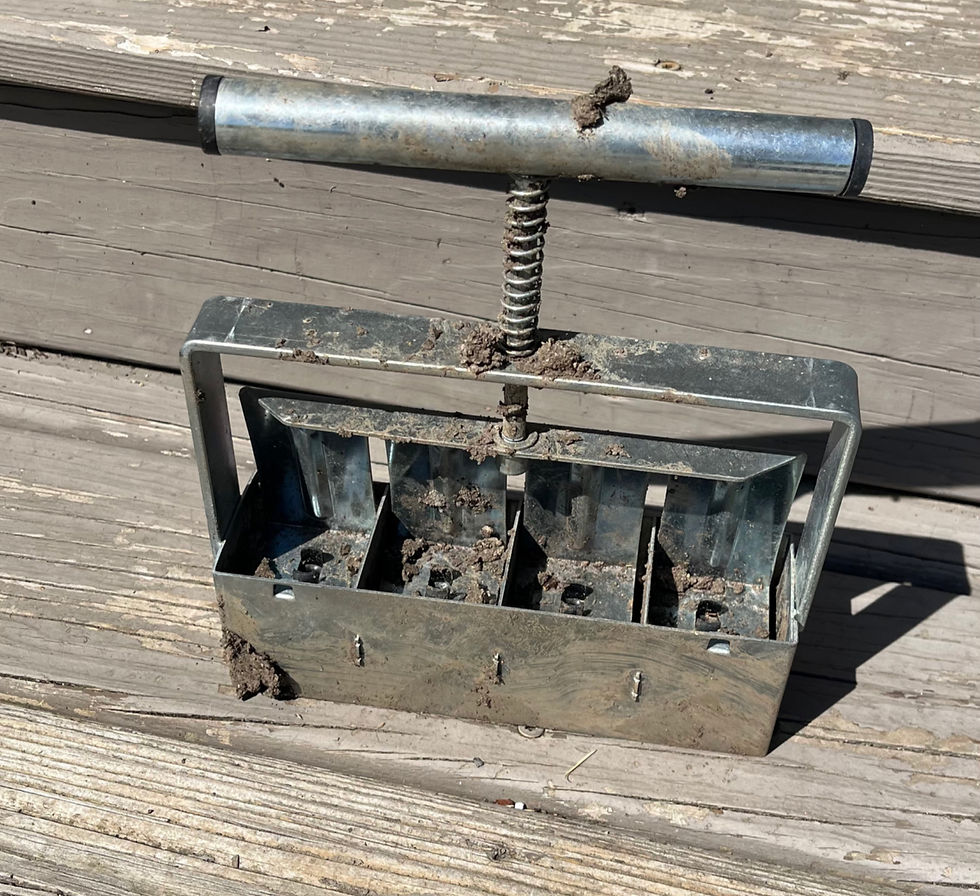
Soil blocking is a seed-starting method that uses compressed cubes of potting mix instead of plastic cell trays or individual pots. Each block holds its shape while giving the seedling room to develop roots.
When roots reach the edge of a soil block, contact with the air encourages them to stop growing outward and branch within the block. This process, known as air pruning, can create a dense root system and reduce the circling or tangling that sometimes happens in plastic containers. Because the entire block is planted, seedlings can also experience less root disturbance during transplanting.
Soil blocking does require a little practice. The mix must contain enough moisture to hold together, and the blocks need consistent watering so they do not dry out. Once you find the right rhythm, it is an efficient way to start many flower seedlings in a relatively small space.
Why Start Flower Seeds in Fall?
Many cold-tolerant flowers grow best during cool weather. Starting them in late summer or early fall gives the seedlings time to develop before the shortest days of winter. After overwintering, established plants can resume growth quickly in spring and often bloom earlier than seedlings started after the last frost.
Fall planting can provide:
Earlier spring flowers
Stronger, well-established plants
More efficient use of indoor seed-starting space
A longer harvest window
Flowers when fewer locally grown varieties are available
The goal is to establish healthy young plants—not to encourage lots of tender growth—before hard winter weather arrives. Low tunnels, frost cloth, an unheated hoop house, or another form of season protection may be needed during cold spells.
The Best Soil Blocking Flower Seeds for Fall
Snapdragons
Snapdragons are one of the best flowers to start in soil blocks because their seeds and seedlings are tiny. Surface-sow the seeds because they need light to germinate. A mini soil blocker makes it easy to start many seeds, and the young plants can be moved into larger blocks as they grow.
Snapdragons appreciate cool temperatures and can overwinter well with protection in many Zone 7 gardens. Look for cut-flower series such as Rocket, Potomac, Madame Butterfly, Chantilly, or Costa. Choose varieties by flowering group so their bloom time matches your intended harvest season.
Dianthus and Sweet William
Dianthus is another dependable choice for fall soil blocking. The seedlings tolerate cool conditions, establish well before winter, and reward the wait with fragrant spring blooms. Sweet William varieties such as Amazon, Sweet, and Hollandia are especially useful for cutting gardens because of their sturdy stems and clustered flowers.
Cover the seeds lightly and keep the blocks evenly moist while they germinate. Once established, the seedlings can be transplanted into prepared beds and protected through winter when needed.
Yarrow
Yarrow is a hardy perennial that can be started from seed in soil blocks during fall. Its flat flower clusters add texture to bouquets, while the plants provide food for pollinators in the garden. Because yarrow seeds are small and need light for germination, press them gently onto the surface of each block instead of burying them deeply.
Rudbeckia
Many perennial and cold-tolerant rudbeckia varieties benefit from an early start. Varieties bred for cutting, including Indian Summer, Prairie Sun, and Sahara, add warm color and a strong focal shape to arrangements. Check the requirements of the specific variety, since germination and cold tolerance can differ.
Feverfew
Feverfew produces clouds of small, daisy-like flowers that work beautifully as bouquet filler. It prefers cool growing conditions and can be started in soil blocks for fall transplanting. Surface-sow or cover the fine seeds very lightly, then keep the blocks moist until germination.
Campanula
Campanula, often called Canterbury bells, is a valuable spring cut flower with bell-shaped blooms. Varieties such as Champion and Champion II can be started in soil blocks in late summer or early fall. The seeds are extremely small and need light to germinate, making careful surface sowing important.
Scabiosa
Scabiosa, or pincushion flower, produces delicate blooms that add movement to arrangements. Cool-season varieties can establish in fall and bloom earlier the following year. Start them in soil blocks, cover the seeds lightly, and avoid overwatering while the seedlings are young.
Calendula
Calendula is a quick-growing, cold-tolerant annual with cheerful orange, yellow, and cream flowers. Its larger seeds are easy to place into standard soil blocks. Calendula may bloom in late fall during mild weather or overwinter for an early spring flush, depending on planting time and protection.
Bachelor’s Buttons
Bachelor’s buttons tolerate cold temperatures and are often direct-sown, but they can also be started in soil blocks when you want more control over spacing and germination. Transplant them while they are still young to minimize root disturbance. Their blue, pink, white, and burgundy flowers bring a relaxed, garden-grown look to spring bouquets.

A Simple Fall Soil-Blocking Process
Moisten a fine-textured soil-blocking mix until it holds together firmly when squeezed.
Press the blocker into the mix, filling each form completely.
Release the blocks into a sturdy tray, preferably one that supports drainage and bottom watering.
Sow one or two seeds per block, following the variety’s instructions for planting depth and light requirements.
Keep the blocks evenly moist using a gentle sprayer or bottom watering.
Provide light and suitable germination temperatures indoors.
Thin to the strongest seedling and move mini blocks into larger blocks when necessary.
Harden seedlings off gradually before transplanting them outdoors.
Protect fall transplants during severe cold, wind, and rapid temperature changes.
Tips for Successful Fall Seed Starting
Work backward from your first expected hard frost so seedlings have enough time to establish. Do not assume every cool-season flower has the same cold tolerance. Research the specific variety, monitor the forecast, and keep frost cloth ready.
Fall seedlings usually grow more slowly as the days shorten, so avoid pushing them with too much fertilizer. Good airflow, careful watering, and proper spacing help prevent disease. Most importantly, label every block or row with the variety and sowing date. Tiny seedlings can look remarkably similar!
Plan Now for Spring Flowers
Starting soil blocking flower seeds in fall is a small investment of time that can lead to earlier blooms and a more productive spring cutting garden. Snapdragons and dianthus are excellent places to begin, while yarrow, rudbeckia, feverfew, campanula, scabiosa, calendula, and bachelor’s buttons can add color, texture, and variety.
At Handpicked Blossoms, each season begins long before the first bouquet is gathered. Fall seed starting is one of the quiet steps that helps us grow locally raised flowers with care for our customers and community in Central Virginia.


Comments